iPhone 18 Pro vs iPhone 16 Pro: Is It Time to Upgrade?
A two-generation comparison should identify what your 16 Pro cannot do comfortably today. Both are compact Pro phones, so the case for an upgrade rests on specific camera, processing or ownership needs rather than a completely different form factor.
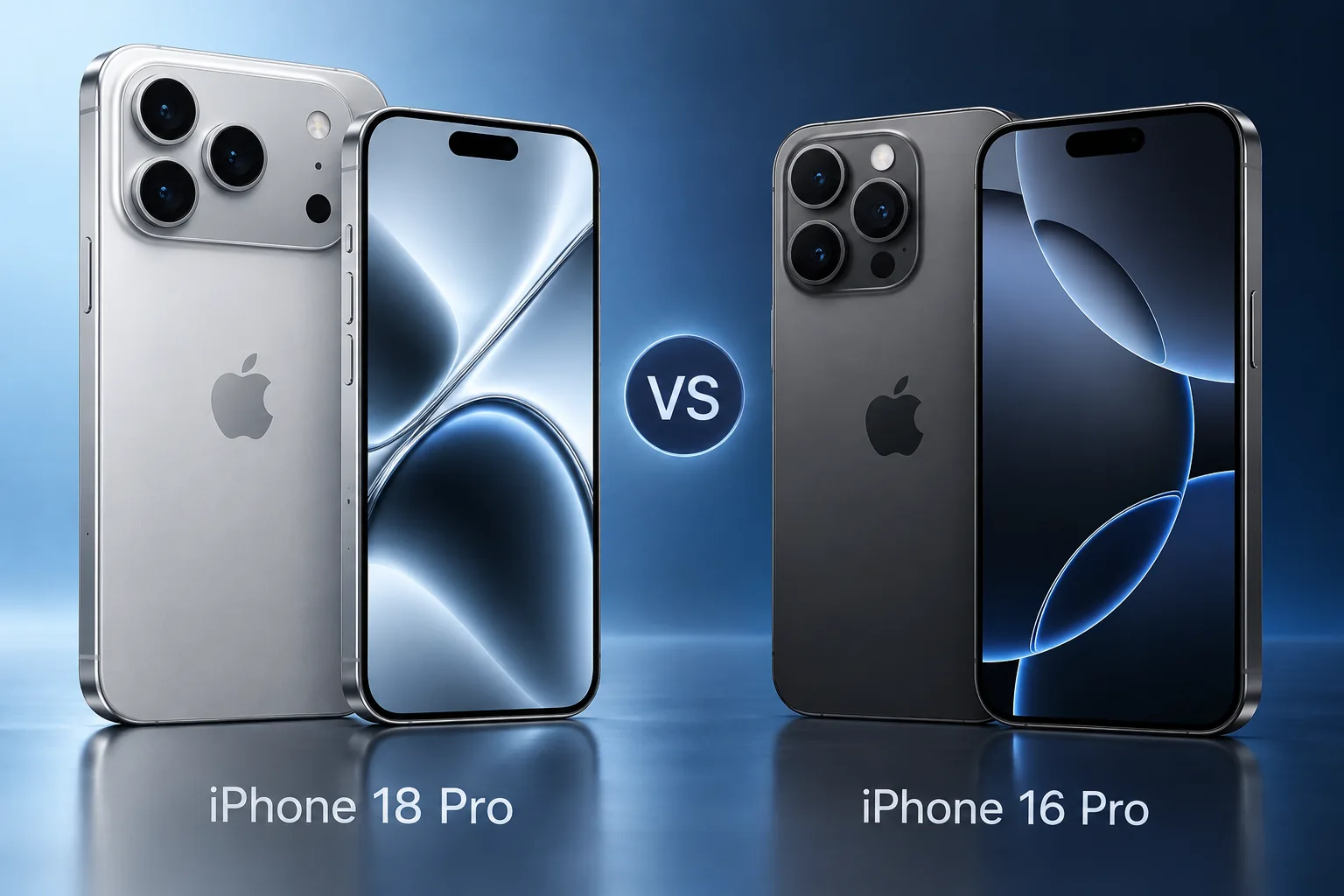
Quick Verdict
The 18 Pro is worth investigating for its newer camera controls and platform. A well-kept 16 Pro remains a sensible choice for someone already satisfied with its display and camera tools. Diagnose battery or charging complaints before turning a repairable issue into an expensive upgrade.
How we compare →
Key Differences at a Glance
| Feature | iPhone 18 Pro | iPhone 16 Pro | What matters |
|---|---|---|---|
| Display | 6.3-inch OLED, adaptive up to 120Hz | 6.3-inch OLED, adaptive up to 120Hz | Size and handling |
| Processor | A20 Pro | A18 Pro | App and workload needs |
| Rear cameras | 48MP main, ultra wide and 4x telephoto; variable main aperture | 48MP main and ultra wide; 12MP 5x telephoto | Capture requirements |
| Battery context | Up to 36 hours video playback (Apple test) | Up to 27 hours video playback (Apple US test) | Claims, not our tests |
| Connector / data | USB-C / USB 3 | USB-C / USB 3 | Cable and workflow |
| Construction | Aluminum; 211g | Titanium design | Protection and handling |
Battery and performance claims are manufacturer figures, not FixUpPhone measurements. Current selling prices may differ from launch prices.
Detailed Comparison
Design & Display
Both occupy the 6.3-inch display class, but their construction and camera-area design differ. Try the new phone with an appropriate case, and do not assume your 16 Pro case will fit. A change from titanium-era styling to aluminum construction is a design difference, not automatic proof of greater durability.
iPhone 18 Pro
- 6.3-inch OLED, adaptive up to 120Hz
- Aluminum; 211g
iPhone 16 Pro
- 6.3-inch OLED, adaptive up to 120Hz
- Titanium design
Handling & ownership considerations
A 16 Pro owner who already finds the size comfortable should focus on what changes within that size. The new phone is not a substitute for a Max-sized reading area. Existing case and lens-protector purchases should be treated as sunk costs, with new exact-fit protection included in the budget.
Performance
A20 Pro is a newer platform than A18 Pro. Whether that matters depends on the jobs you run: professional media work can have different needs from maps and messaging. Check whether slow behavior on the older phone comes from storage pressure, software or battery condition before attributing it entirely to its processor generation.
For a business user, a reliable 16 Pro that runs all required apps already has a strong advantage: it is configured and familiar. For a creator reaching a documented feature limit, newer hardware can make more sense. Identify that limit before comparing financing offers.
Camera Comparison
The 16 Pro offers a dedicated 5x telephoto, while the newer system uses a different telephoto configuration and variable main aperture. Do not describe every focal-length change as a universal upgrade. If you frequently photograph distant subjects, compare results at the distance you actually use; if you work creatively with depth, investigate the new main-camera control.
The focal-length difference deserves special care. A dedicated 5x view on 16 Pro and a 4x lens plus crop options on 18 Pro are different capture arrangements. A wildlife or event photographer should examine comparable samples around the zoom setting they actually use; a higher megapixel number alone does not settle the choice.
Battery Life & Charging
Two years of ownership can make battery condition relevant, but age alone is not a diagnosis. Review the battery information and how your usage has changed. A service quote gives you a real alternative to the purchase price. Compare manufacturer battery claims cautiously because test conditions and regional configurations can differ.
Apple lists up to 27 hours of video playback for the US 16 Pro and 36 for 18 Pro. Those are manufacturer maxima for new devices. Your two-year-old unit may differ further, but this article cannot estimate that gap without its condition and usage data.
Software & Features
Both belong to the USB-C Pro era and support Apple Intelligence hardware requirements, but individual features still have device, language and regional limits. Check the exact feature rather than assuming all software improvements require an 18 Pro. Move important accounts and verify backups before completing any trade-in.
Both phones use USB-C, but cables and external storage still need the required data capability for a demanding workflow. If you already have a dependable 16 Pro recording setup, verify every connected component with the replacement before using it for paid work.
Repairability & Ownership
For a used 16 Pro, inspect parts history, display behavior, cameras and charging before purchase. For an owned unit, ask whether a single repair would restore the experience you want. Do not compare an uninspected trade-in estimate with a guaranteed new-phone price; first establish the device’s actual condition and offer.
Apple’s Parts and Service History can provide useful context on supported iPhones, but it is not a substitute for functional inspection. Test focus, speaker and microphone behavior, touch response and charging. A seller’s description of a repair should be supported by records where available.
Explore FixUp repair services or request an assessment before deciding.
Price & Value
Compare the net cost of keeping and servicing the 16 Pro with the full 18 Pro purchase. If the older phone is already paid off and meets your needs, the upgrade has to provide a clear benefit. A buyer coming from an older non-Pro may reasonably choose the newer model for a longer intended ownership period.
For an existing owner, put a written repair quote beside the actual net replacement cost. For someone buying neither phone yet, compare return rights and condition as well as generation. A lower-priced 16 Pro is a different proposition if it arrives with a worn battery or uncertain previous work.
Pros & Cons: iPhone 18 Pro
Reasons to consider
- Newer Pro platform
- Variable main aperture
Trade-offs
- Significant replacement expense
- Focal-length changes are not universal wins
Pros & Cons: iPhone 16 Pro
Reasons to consider
- Dedicated 5x telephoto
- Existing investment can keep working
Trade-offs
- Battery condition may need attention
- Older processing platform
Who Should Choose iPhone 18 Pro?
- Choose 18 Pro for a verified camera or workload requirement that your 16 Pro does not satisfy.
- Newer Pro platform
- Variable main aperture
Who Should Choose iPhone 16 Pro?
- Keep 16 Pro when its display, 5x camera option and everyday behavior are already doing the job well.
- Dedicated 5x telephoto
- Existing investment can keep working
Ready to Buy?
Compare the exact model, storage, condition, return terms and complete price before ordering.
View Buying OptionsNo affiliate tracking links are currently used. Retailer stock and prices are not guaranteed.
Already Own One?
Describe the issue before deciding to replace your phone. Request mail-in or local repair help from FixUp.
Start Mail-In RepairSelect the mail-in optionMail-In Repair: How It Works
Device and issue2. Arrange shipping
Wait for instructions3. Assessment
Approve a quote4. Return
Agree return details
A request is not a confirmed appointment or prepaid shipping label. Confirm service eligibility, parts, cost, turnaround and return arrangements before shipping. Do not mail a swollen or damaged battery; contact the team for safe handling guidance.
Frequently Asked Questions
Should you choose iPhone 18 Pro or iPhone 16 Pro?
The 18 Pro is worth investigating for its newer camera controls and platform. A well-kept 16 Pro remains a sensible choice for someone already satisfied with its display and camera tools. Diagnose battery or charging complaints before turning a repairable issue into an expensive upgrade.
What camera difference matters?
The 16 Pro offers a dedicated 5x telephoto, while the newer system uses a different telephoto configuration and variable main aperture. Do not describe every focal-length change as a universal upgrade. If you frequently photograph distant subjects, compare results at the distance you actually use; if you work creatively with depth, investigate the new main-camera control.
Should you repair your current phone first?
For a used 16 Pro, inspect parts history, display behavior, cameras and charging before purchase. For an owned unit, ask whether a single repair would restore the experience you want. Do not compare an uninspected trade-in estimate with a guaranteed new-phone price; first establish the device’s actual condition and offer.
Does this article contain hands-on tests?
No. This is source-based analysis of manufacturer documentation and ownership considerations. We have not measured performance, endurance or image quality, and we do not assign a numerical review rating.
Are these affiliate offers?
No affiliate tracking links are currently used. Manufacturer buying links do not guarantee availability or a current price. Check the exact model and offer before ordering.
Sources & Editorial Method
Documentation checked September 18, 2026. We compare published features and explain ownership trade-offs; no physical testing, measured benchmark, technician case history or numerical review rating is claimed. Images are original illustrations. Buying recommendations are editorial judgments, not guarantees of price, stock or repair outcome.
Questions or corrections? Contact FixUpPhone.