Reviews & Comparisons · iPhone 14 Pro
iPhone 14 Pro best screen protectors Review & Buying Guide: Features, Trade-Offs & Value
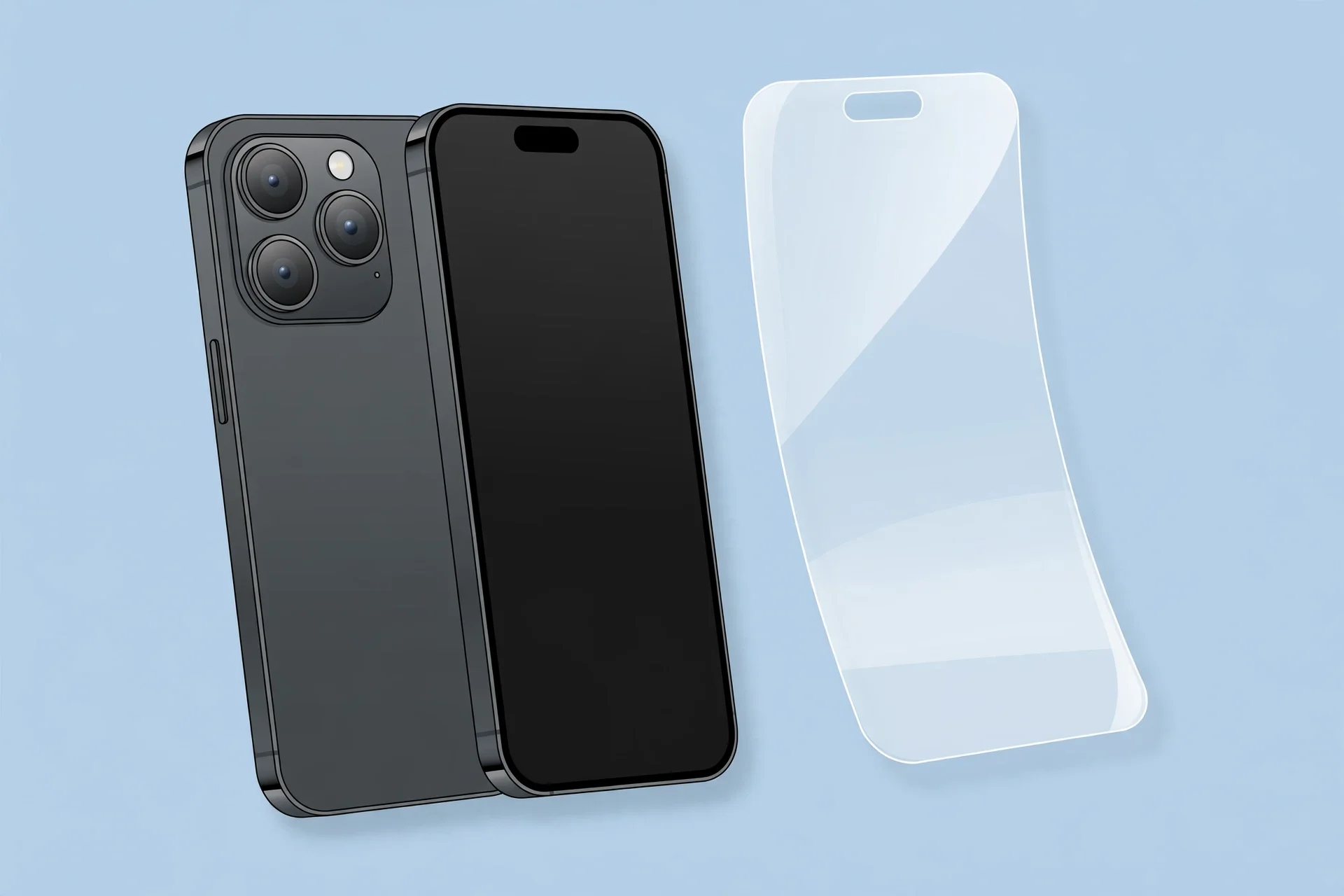
The protector question for this phone is a cut-out question first: a protector must match this model’s 6.1-inch panel and its Dynamic Island cut-outs, with an edge that works with your case rather than fighting it — a protector cut for the Pro Max, the base 14 or any 15/16-series phone is the wrong protector, however similar it looks. No product is named, ranked or priced in this guide, deliberately: protectors are fit-specific, no product pack exists for this block, and no product was re-checked on its maker’s page with the device selector set to this model. Instead, five use-case categories and a four-point fit test let you judge any protector on the maker’s own page — and the $329 screen fee at Apple’s launch figure is the reason the choice matters at all.
How we reviewed — methodology & evidence note
This is a desk review: FixUpPhone has not hands-on tested any protector discussed, and nothing here is a scratch test, a measurement or a ranking. The fit facts are Apple’s published specifications for this model (Apple technical specifications, via the FixUpPhone iPhone 14 Pro research pack, checked 15 October 2026) and Apple’s published US repair fees at launch (September 2022, no post-launch revision found as of November 2026; estimator re-check attempted 2 November 2026 — per-model fees render through a selector with no static figure readable). Criteria-only angle, chosen deliberately: no product is named, ranked or priced anywhere in this article, because no product was verified for this exact fit on its maker’s page in this pass, and a product checked for any other model is not checked for this one. Any hardness, drop or clarity figure a maker prints is a manufacturer claim, never a comparable measurement, and no such figure is printed here for any product. Judge a protector by the fit test in section ② and by the maker’s own page for this exact model.
Quick Expert Summary
Verdict: Buy the cut-outs, then the category. The only protector worth money for an iPhone 14 Pro is one whose maker page names the iPhone 14 Pro itself, cut for its 6.1-inch panel and its Dynamic Island cut-outs, with an edge your case does not lift — everything else is a reject, however good its marketing. Organise by use case, not by a “best” ranking no one tested: tempered glass, film, privacy, anti-glare and camera-lens coverage each trade clarity, feel and protection differently, and the right trade depends on where the phone lives — pocket, bag, job site or dashboard. The stakes are concrete: a screen is $329 at Apple’s launch fee, so a protector that actually stays stuck to the glass is worth more than a prettier one that lifts at the edge. No product is named or priced here, because none was verified for this fit — the fit test below is how you verify any protector yourself.
Evidence note: fit facts are Apple’s specifications for this model; hardness and protection figures are discussed only as a category of manufacturer claim, never as measured results.
Works in a protector buyer’s favour
- The fit test is mechanical: model name, panel size, Dynamic Island cut-outs, case edge
- A protector sacrifices itself for the $329 screen — the cheapest insurance on this phone
- Use-case categories let you trade clarity against privacy or glare honestly
- Alignment trays and dust removal make a straight install achievable at home
Watch out for
- Pro Max, base 14 and 15/16-series protectors do not fit this panel
- A protector that lifts at the case edge protects nothing and collects dust
- Hardness and drop claims are manufacturer claims, not comparable tests
- Privacy and anti-glare finishes trade clarity and brightness for their benefit
① The Panel the Protector Must Fit
Specifications below are Apple’s for this model (manufacturer specifications, Apple technical specifications checked 15 October 2026). Every line here is a fit check, not background.
| Item | What the protector must match |
|---|---|
| Panel | 6.1-inch Super Retina XDR OLED, 2556×1179 at 460 ppi (manufacturer specifications). A protector sized for a 6.7-inch Pro Max panel or a 6.1-inch panel from another generation with different cut-outs is the wrong size, even if the diagonal matches. |
| Cut-outs | Dynamic Island at the top of the display, with the TrueDepth camera system behind it — 12MP TrueDepth at ƒ/1.9 with autofocus (manufacturer specifications). The protector’s top cut-out must clear the Dynamic Island and the front camera without covering either; a notch-shaped cut-out from an older generation is a reject. |
| Edge & case fit | The protector edge must sit inside your case’s lip, not under it: a case that lifts the protector edge will peel it within days. Check the combination, not each item alone, and prefer a case-friendly edge if you use a case — which, on a phone whose screen is $329 at Apple’s launch fee, you should. |
| Touch & display | ProMotion and Always-On are present on this model (manufacturer specifications). The protector must not dull touch response at the edges or dim the Always-On display noticeably — check both in hand on arrival, not from the maker’s clarity claim. |
| Body context | 147.5 × 71.5 × 7.85 mm, 206 g, surgical-grade stainless steel design, textured matte glass back (manufacturer specifications). The protector guards only the front glass; the back glass and the square triple-camera module need the case, covered in the companion cases guide. |
| Charging context | MagSafe up to 15W (manufacturer claim); Qi2 up to 15W only with iOS 17.2 or later. A front protector does not affect charging, but a camera-lens protector that sits proud of the module can interfere with a case lip — check the stack, not the single item. |
The fit rejects, stated plainly. Any protector whose maker page names the iPhone 14 Pro Max, the base iPhone 14, or any 15- or 16-series model is not a protector for this phone, even if a marketplace listing bundles the names together. Any protector with a notch cut-out rather than a Dynamic Island cut-out, or one whose edge your case lifts, likewise fails. Marketplaces merge model names aggressively; the maker’s own page, with its device selector set to iPhone 14 Pro, is the only listing that counts.
② Protector Categories & the Four-Point Fit Test
Organised by use case, never by a hands-on “best” ranking — no protector was tested, and no ranking is asserted. Read each category as a trade-off, then run the fit test on any protector you consider, on the maker’s own page.
Tempered glass
The default choice: a rigid glass sheet that takes scratches and light impacts itself and keeps the screen’s feel closest to bare glass. Trade-off: it adds a hair of thickness, it can chip at an exposed edge, and a glass sheet whose edge your case lifts will peel — check the case combination before you commit. Best for most owners; worst for tight-fitting cases unless the edge is case-friendly.
Film
A thin plastic layer that guards against scratches with almost no added thickness or weight. Trade-off: the least impact protection in this guide, and it shows wear sooner than glass. Best for careful carriers who hate added thickness; worst for anyone who drops phones, where glass earns its thickness.
Privacy
Narrows the viewing angle so neighbours cannot read the screen — for trains, offices and public spaces. Trade-off: it dims the display and narrows the viewing angle for you too, which costs brightness on a panel whose brightness figures (1,000 nits typical, 1,600 nits peak HDR, 2,000 nits peak outdoor) are Apple ratings, not lab measurements. Check brightness and Always-On legibility in hand before the return window closes.
Anti-glare / matte
Cuts reflections outdoors and under office lighting, at the cost of a slightly softer image. Trade-off: the matte texture changes the screen’s look and feel, and it can mute the sharpness that the 460 ppi panel exists to deliver. Best for heavy outdoor use; worst for photo and video work where clarity matters most.
Camera-lens coverage
Separate small protectors for the rear lenses, guarding the square triple-camera module’s glass. Trade-off: an extra layer over lenses that can flare in bright light, and a stack that can fight the case lip. If you use one, check flash, LiDAR and all three lenses — Main, Ultra Wide and 3x Telephoto — in photos after fitting, and check the case still seats over it.
The four-point fit test (run on the maker’s page, then in hand)
1. Name: the maker page names the iPhone 14 Pro itself, with the device selector set to it — not a bundle listing, not “14 series”. 2. Cut-outs: the top cut-out clears the Dynamic Island and the front camera, with no notch shape and no covered sensor. 3. Edge: the protector sits flat to all four edges and your case does not lift it — fit protector and case together, not separately. 4. Function: touch responds cleanly at the edges, the Always-On display stays legible, and photos through the front camera and all three rear lenses are clean. Fail any point and the protector is the wrong protector, whatever its category or price.
Pros & Cons of Protecting This Screen
Pros
- Sacrifices itself for the $329 screen — the cheapest insurance on this phone
- Keeps the 6.1-inch panel scratch-free for resale and daily use
- Privacy and anti-glare options solve real viewing problems
- A straight install is achievable at home with an alignment aid
Cons
- A wrong-fit protector — Pro Max, base 14, 15/16-series — fits nothing
- A case that lifts the edge undoes the protection within days
- Hardness and drop claims are manufacturer claims, not comparable measurements
- Privacy and matte finishes trade clarity and brightness for their benefit
③ Before You Pay: How to Judge a Protector Without a Price List
No protector price is printed in this guide, deliberately: no product was verified for this exact fit on its maker’s page in this pass, maker list prices are the only prices that would count, and deal or street prices move daily. Judge any protector by the fit test in section ② and by these three checks, on the maker’s own page for this exact model:
| Check | What counts | Origin |
|---|---|---|
| Model naming | Maker page names the iPhone 14 Pro itself, device selector set to it | Maker page (verify yourself) |
| Protection wording | Hardness, drop and clarity figures | Manufacturer claims only — never comparable measurements |
| Repair stakes | Screen $329, screen + back glass $599 (Apple launch fees) | Manufacturer fees, launch figures (Sep 2022) |
Value, honestly stated. The value of a protector for this phone is the repair it prevents, and the repair is priced: a screen at $329 at Apple’s launch fee. A protector that stays stuck, clears the Dynamic Island and survives your case is worth more than a cheaper one that lifts, bubbles or dulls the display — but no protector makes the screen crack-proof, and no maker claim in this guide should be read as a guarantee. Buy from a seller with a return policy that lets you run the four-point fit test in hand, including with your case fitted, and return a protector that fails any point. A two-pack is often the honest value buy: the first install teaches you the alignment, and the spare covers the first chip.
④ Repairs, Warranty & What It Means for You
A protector is repair prevention, and the prevention is priced by Apple’s published US fees for this model at launch:
| Repair | Apple US fee | With AppleCare+ |
|---|---|---|
| Battery | $99 | $0 under 80% health |
| Screen | $329 | $29 |
| Back glass | $499 | $29 |
| Screen + back glass | $599 | $58 |
| Rear camera | $219 | $99 |
| Other damage | $649 | $99 |
Fees: Apple US published prices at launch (September 2022); no post-launch revision was found for this model as of November 2026, and Apple’s interactive repair estimator renders per-model fees through a selector with no static figure readable (attempted 2 November 2026), so these are headlined as launch figures, not verified-current ones. They are this model’s fees, not the 15 Pro’s or the Pro Max’s: the screen here is $329, not $379, the back glass is $499, and other damage is $649. The rear camera $219 line carries a sourcing caveat: it rests on September 2023 comparison coverage stating the fee was unchanged from this model to the 15 Pro, plus a September 2024 estimator quote for this generation’s Pro Max, which shares the identical camera system. No port-only, speaker-only, microphone-only or button-only service fee exists — such damage falls under “other damage” ($649). If the screen already needs replacing, a protector hides nothing: see our screen replacement cost guide first, and if touch is already failing, our screen not responding fix guide covers the failure modes.
The warranty reality
Apple’s standard warranty runs one year from original purchase. This model was released on 16 September 2022 and discontinued in September 2023, so a launch-cohort phone is well past its year, and any unit with cover today holds it through AppleCare+ or a later purchase date. A protector does not extend that warranty, and a cracked screen under a protector is still a cracked screen — the protector’s job is to take the next scratch, not to repair the last one.
FixUp’s role: check before you commit, repair if you buy
If the phone’s screen is already damaged, bring it to FixUp for an assessment: battery health, screen originality, cameras, charging and damage can be checked, and any repair is quoted after assessment; we do not publish repair prices in advance. Repairs take 1–7 days and carry a 3-month warranty. Booking is a request our team confirms, not an instant confirmation.
- Lynwood: 3100 E Imperial Hwy, Store M1002, Lynwood, CA 90262 — daily 11 AM–8 PM — (805) 857-4225
- Santa Barbara: 619 A State St, Santa Barbara, CA 93101 — Mon–Fri 11 AM–8 PM, Sat 10 AM–8 PM, Sun 12 PM–7 PM — (805) 857-4226
- Las Vegas: 875 S Grand Central Pkwy, Unit TT32, Las Vegas, NV 89106 — Mon–Sat 10 AM–8 PM, Sun 10 AM–7 PM — (818) 482-3605
Mail-in works nationwide: how mail-in repair works. The customer pays inbound shipping and FixUp pays return shipping; back up first, confirm our instructions before shipping, and never mail a hot or swollen phone. Start from book a repair or contact the team (support@fixupphone.com).
⑤ The Decision
Buy tempered glass for most owners — it keeps the screen’s feel closest to bare glass and takes the scratches itself — film if you hate thickness, privacy if you work in public, anti-glare if you live outdoors, and lens coverage only after checking flash, LiDAR and all three lenses through it. But only after the protector passes the four-point fit test for this exact model, with your case fitted. Pay more only for a verified fit and a return policy that lets you test it in hand, including a spare in the pack; do not pay more for a hardness number, because makers test differently and the numbers do not compare. Walk away from any protector that names another model, carries a notch cut-out, or lifts under your case. Pair the protector with the companion cases guide: iPhone 14 Pro best cases covers the back glass and camera module the protector cannot reach.
⑥ Alternatives Worth Considering
A case first. If the budget covers one item only, a case protects the back glass ($499 at Apple’s launch fee) and the camera module as well as the screen edge. Our companion iPhone 14 Pro best cases guide carries the fit criteria: the exact 6.1-inch body, the Ring/Silent switch cutout and the square triple-camera opening.
Going bare, knowingly. Some owners prefer the bare Ceramic Shield front as it is. That is a legitimate choice, but price it honestly: a screen at $329 at Apple’s launch fee, with nothing sacrificial in between. If you go bare, a careful pocket habit — no keys, no coins — is the remaining protection.
Repair first if the screen is already damaged. A protector over a cracked or unresponsive screen hides the problem without fixing it. The repair guides for this model — screen replacement cost and screen not responding fix — set out the options before you spend on protection for a screen that already needs work.
Accessories to Budget From Day One
Budget for the protector and the case together, not one or the other: the protector guards the front glass, the case guards the back glass and the camera module, and the lip heights of the two must work together rather than fight. Fit them in that order — protector first, case second — and check the edges together before the return window closes. A Lightning cable that fits through the case’s bottom opening matters more than it sounds, since a case that forces you to remove it to charge will come off. No product is named or priced here; judge any accessory by the fit test in section ② and the maker’s own page for this exact model.
Everything in our accessories shop is listed with its fit stated; whichever protector you choose, confirm it names the iPhone 14 Pro itself.
Frequently Asked Questions
Why does this guide name no screen protectors or prices?
Because no product was verified for this exact fit on its maker’s page in this pass, and protectors are fit-specific: a product checked for the Pro Max, the base 14 or any 15/16-series phone is not checked for this one. Naming products without that check would be inventing a recommendation. The guide instead gives you the fit test and the use-case categories to judge any protector on the maker’s own page.
Will an iPhone 14 Pro Max screen protector fit my iPhone 14 Pro?
No. The Pro Max panel is 6.7 inches against this phone’s 6.1-inch panel, with different cut-outs, so its protector will overhang and lift. The same applies to base 14 and 15/16-series protectors: similar-looking is not fitting, and a lifted edge protects nothing.
What cut-outs does my protector need?
Dynamic Island cut-outs for this model’s 6.1-inch panel — the pill-shaped area at the top housing the TrueDepth camera system. A protector with a notch cut-out from an older generation, or one that covers the front camera, fails the fit test on sight.
Will a screen protector interfere with my case?
It can, if the case lip lifts the protector edge. Fit them together — protector first, case second — and check all four edges before the return window closes. A case-friendly protector edge is the honest fix, not pressing a lifted edge back down daily.
Do hardness ratings compare across brands?
No. Hardness, drop and clarity figures are manufacturer claims, tested differently by each maker, so they do not form a ranking. Treat them as a category of claim, check touch response and clarity in hand, and buy from a seller whose return policy lets you test the protector yourself.
Will a privacy protector dim my screen?
Yes — that is the trade. Privacy film narrows the viewing angle and dims the display, which costs brightness on a panel whose figures (1,000 nits typical, 1,600 nits peak HDR, 2,000 nits peak outdoor) are Apple ratings, not lab measurements. Check brightness and Always-On legibility in hand before the return window closes.
Should I buy a two-pack?
Usually yes. The first install teaches you the alignment, and the spare covers the first chip or lift — a protector’s job is to be replaced, and a spare means the screen is never left bare while a replacement ships.
Can FixUp fit a screen protector for me?
Yes — bring the phone and the protector to any of our three stores and we can check the fit, the Dynamic Island clearance and the case combination in person. Any repair work is quoted after assessment; repairs take 1–7 days and carry a 3-month warranty.
Specs, fees and fit facts are attributed and dated inline.
Desk review only — we do not claim hands-on use we did not do.
Lynwood · Santa Barbara · Las Vegas, plus nationwide mail-in.
1–7 day repairs, 3-month warranty, quoted after assessment.
Sources & Editorial Notes
- Apple — iPhone 14 Pro technical specifications and US repair fees at launch, via the FixUpPhone iPhone 14 Pro research pack, checked 15 October 2026 (launch figures September 2022; no post-launch revision found; estimator re-check attempted 2 November 2026 — per-model fees render through a selector with no static figure readable).
- FixUpPhone — service terms, stores and mail-in rules: repairs, locations, mail-in repair.
Editorial note: this guide is a desk review and a criteria-only accessory guide. No product is named, ranked or priced, because no product was verified for this exact fit on its maker’s page in this pass; hardness, drop and clarity figures are discussed only as a category of manufacturer claim. No hands-on testing, ownership experience or customer stories are claimed anywhere in this article.