iPhone 18 Pro Camera Review: Photo, Video & Everyday Results
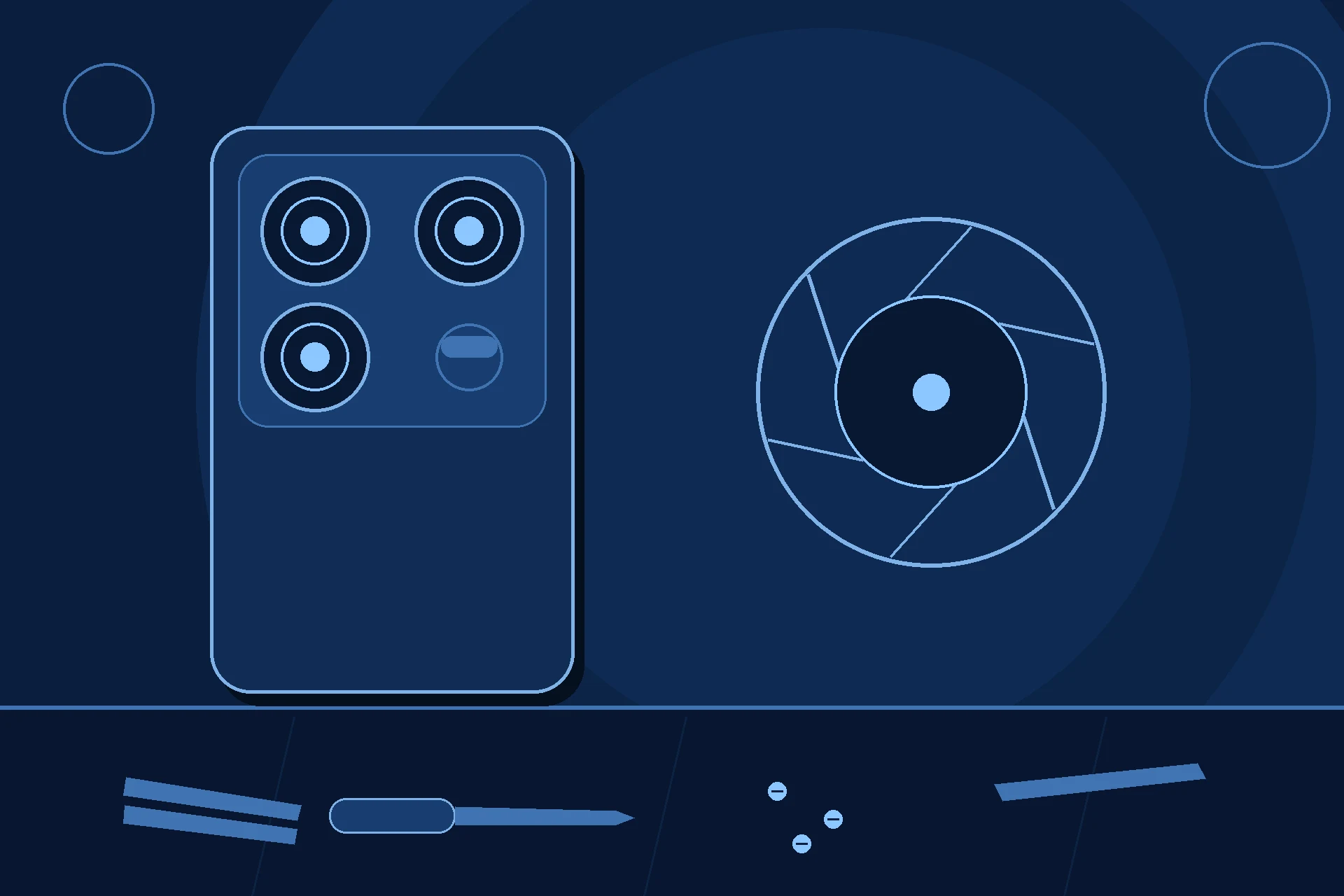
This is a camera review that shows its working. The iPhone 18 Pro’s headline change is a main camera with a genuinely variable aperture — four physical presets, confirmed both by Apple’s specifications and by iFixit’s teardown. This article separates what the published specifications prove, what named reviewers found in their own first weeks with the Pro, and what nobody can honestly claim yet — including the lab measurements that exist for the Pro Max and are not reused here as Pro results. FixUpPhone has not hands-on tested this phone and took none of the photos discussed; this is a desk review.
How This Review Works — Methodology
This is a desk / specifications-based review. Camera hardware facts come from Apple’s specifications (checked October 2026) and iFixit’s September 2026 teardown, which physically inspected the aperture mechanism. Everyday-results material comes only from named reviewers’ own use of the iPhone 18 Pro — XDA Developers (October 10, 2026) and 9to5Mac’s one-month report (October 16, 2026) — and is attributed to them wherever it appears. FixUpPhone did not hands-on test the iPhone 18 Pro: no photo, video sample, benchmark or score here is ours. Where detailed lab measurements exist only for the Pro Max, this article says so instead of borrowing them.
ϟ Quick Expert Summary
The iPhone 18 Pro’s camera system (manufacturer specifications) is three 48MP Fusion cameras — a 24mm main with variable aperture ƒ/1.48 / ƒ/1.8 / ƒ/2.8 / ƒ/4.0, a 13mm ultra wide at ƒ/2.2, and a 100mm (4x) telephoto at ƒ/2.8 that also enables a 12MP optical-quality 8x (200mm) — plus an 18MP Center Stage front camera. The variable aperture is the real story: physical blades, not a software effect. Reviewers who lived with the Pro found the depth-of-field change subtle but the low-light flexibility and new manual controls genuinely useful (attributed reports). The repair footnote matters too: the aperture cannot be fixed alone — a failure means a whole camera assembly at Apple’s published $249 fee.
Desk-review guidance from published specifications, teardown findings and attributed reviewer coverage — not a hands-on report, a FixUpPhone price quote or a customer history.
✓ The Camera Suits You When
- You shoot in low light and want the ƒ/1.48 option
- You want manual control — shutter, white balance, focus
- You use 4x–8x reach for events, travel and wildlife
- You record lots of video and will buy the storage for it
× Set Expectations When
- You expect DSLR-style background blur — the sensor is small
- You never leave Auto and do not plan to start
- You want verified Pro lab measurements — few exist yet
- Your current camera fault is fixable for less than a new phone
ƒ/1.48–ƒ/4.0
Variable main aperture, four presets
8x
Optical-quality reach at 200mm, 12MP
48MP ×3
Main, ultra wide and telephoto — all Fusion
18MP
Center Stage front camera, ƒ/1.9
Real blades.
Real control.
A variable aperture you can set — and a repair bill to respect.
① Key Specifications
| Main camera | 48MP Fusion Main, 24mm, variable aperture ƒ/1.48 / ƒ/1.8 / ƒ/2.8 / ƒ/4.0 |
|---|---|
| Ultra Wide camera | 48MP Fusion Ultra Wide, 13mm, ƒ/2.2 aperture |
| Telephoto camera | 48MP Fusion Telephoto, 100mm (4x), ƒ/2.8 — also enables 12MP optical-quality 8x (200mm), ƒ/2.8 |
| Front camera | 18MP Center Stage camera, ƒ/1.9 aperture |
| Microphones | Four studio-quality mics |
| Display | 6.3-inch Super Retina XDR OLED, 2622×1206, 460 ppi, ProMotion adaptive up to 120Hz; 1,000 / 1,600 / 3,000 nits (manufacturer specifications) |
| Chip | A20 Pro — 6-core CPU (2 super + 4 efficiency), 7-core GPU with Neural Accelerators, dual 16-core Neural Engine |
| Construction | Aluminum unibody; Ceramic Shield 2 front; Ceramic Shield back. Finishes: Black, Silver, Glacier, Burgundy |
| Weight / size | 211 g; 150.0 × 71.9 × 8.75 mm |
| Storage | 256GB / 512GB / 1TB / 2TB — not expandable |
| Battery (Apple test claims) | Typical use up to 24 hours; video playback up to 36 hours; streamed up to 33 hours |
| Charging (Apple claims) | USB-C up to 50% in around 15 minutes with a 60W-capable adapter or higher; MagSafe up to 50% in 30 minutes with a 35W adapter or higher; MagSafe and Qi2 up to 25W |
| Connector | USB-C, USB 3 up to 10Gb/s, DisplayPort |
| Wireless | Apple N1 — Wi-Fi 7, Bluetooth 6, Thread; Apple C2 modem; physical SIM or eSIM depending on region |
| Resistance | IP68 laboratory rating when new; liquid damage is not covered by warranty |
| US starting price / release | $1,199 for 256GB; released September 18, 2026; iOS 27 |
Apple Support — iPhone 18 Pro technical specifications
Teardown footnote: iFixit counted six polymer-composite aperture blades, each about as thin as a human hair, and confirmed the four presets — the variable aperture is mechanical, and ƒ/1.78 (the 17 Pro’s fixed aperture) is not among them.
② In Depth: The Camera System
Analysis based on Apple’s published specifications, iFixit’s teardown findings, and camera impressions attributed to named reviewers of the Pro itself — each labelled by origin.
The variable aperture: what it is, and what it is not
The main camera’s aperture physically opens and closes across four presets — ƒ/1.48, ƒ/1.8, ƒ/2.8 and ƒ/4.0 (manufacturer specification; mechanism confirmed by iFixit’s teardown). What that buys is exposure and depth control: a wider opening for low light, a narrower one for deeper focus and slower shutter work. What it does not buy is DSLR-style blur. XDA’s reviewer, shooting with the Pro for weeks, found the depth-of-field difference between ƒ/1.48 and ƒ/4.0 present but subtle — the sensor is small and the physical opening is a few millimetres — and expected many users to keep preferring Portrait Mode’s software blur for drama (attributed reviewer impression, October 10, 2026). iFixit’s teardown makes the same physics point from the hardware side. Judge the feature as control, not as magic.
Everyday results, as reported by the people who shot them
Two attributed pictures from the first month. 9to5Mac’s reviewer, after a month of daily use (October 16, 2026), called the main camera the year’s star: shooting mostly in Auto, the phone chose ƒ/1.48 with some ƒ/1.8, and the results consistently pleased a self-described non-expert — evidence that the aperture helps without demanding attention. XDA’s reviewer found the wider ƒ/1.48 genuinely useful for low-light and night shooting, relying less on Night mode; Apple claims the wider aperture offers 50 percent better low-light performance than the previous fixed ƒ/1.8 (manufacturer claim, as reported by XDA). XDA also welcomed Apple’s new built-in manual controls — shutter speed, white balance, histogram and focus — while finding their small icons fiddly. None of this is FixUpPhone’s testing; it is the honest state of Pro-specific evidence in week five.
Reach, width and the front camera
The telephoto is a 100mm (4x) ƒ/2.8 lens (manufacturer specification) whose sensor also enables a 12MP optical-quality 8x at 200mm — an optical-quality mode of the same lens, not a second telephoto and not a digital crop dressed up as one. The ultra wide is 48MP at 13mm, ƒ/2.2; the front camera is an 18MP Center Stage unit at ƒ/1.9, the specification that matters for video calls and front-facing video. All three rear cameras are 48MP Fusion units, so switching focal lengths does not mean switching to a visibly weaker sensor on paper. What specifications cannot tell you is rendering taste — colour, sharpening, skin tones — and this article will not invent an opinion about it.
What is not claimed here — and why
Detailed aperture-by-aperture sharpness measurements circulating in review coverage were taken on the Pro Max, not this phone; they are not presented as Pro results. No Pro-specific lab has published a full measured camera test that we could open and verify at the time of writing, so this review contains no lab sharpness table, no DxOMark-style score and no sample-photo verdicts. When a named lab publishes Pro measurements, they belong in an update — attributed, dated and linked — not blended silently into this text.
The repair reality behind the headline feature
iFixit’s teardown adds the ownership footnote: the aperture assembly cannot be repaired on its own. A stuck or damaged aperture means replacing the whole main-camera assembly — the assembly itself is modular and relatively easy to swap once the phone is open, and Apple’s published rear-camera fee is $249 ($99 with AppleCare+). More moving parts is, in iFixit’s own framing, a new failure mode. That does not make the feature a mistake; it makes a case, screen protector and the fee table part of the camera buying decision, which is why the repair angle below links the live camera guides.
Questions to ask before you buy for the camera
- Do I shoot enough low light for ƒ/1.48 to matter to me?
- Will I actually set apertures manually — or stay in Auto (where the phone chooses well, per attributed reports)?
- Is 8x optical-quality reach worth more to me than a larger screen?
- Have I budgeted storage for video — the tier cannot be changed later?
- Am I expecting background blur a small sensor cannot deliver?
- Have I counted protection, given the $249 camera fee?
③ Pros & Cons: The Sourced Trade-Offs
✓ Strengths
- Variable aperture is real hardware — four physical presets (specification + teardown)
- All three rear cameras are 48MP; 8x optical-quality reach from the telephoto
- Manual Pro controls now built in (attributed reviewer report)
- One month in, reviewers praise Auto results and low-light flexibility (attributed)
× Trade-Offs
- Depth-of-field effect is subtle on a small sensor (attributed reviewer impression)
- Aperture failure means a whole camera assembly — $249 at Apple
- No verified Pro-specific lab camera measurements to cite yet
- The best camera tier decisions are storage decisions — and storage is fixed
Storage for Camera Work
The camera and the storage tier are one decision: stills are cheap, video is not, and the tier cannot be changed after purchase (manufacturer specification).
| Tier | Buy it if | Skip it if |
|---|---|---|
| 256GB (from $1,199) | Photos are your main use and you archive to cloud or computer regularly | You record long 4K or ProRes sessions |
| 512GB | You shoot mixed photo and video and keep it on-device | Your library lives in the cloud |
| 1TB | Video is your work — events, content, field recording | It would sit mostly empty |
| 2TB | You record long-form ProRes and edit on the phone | Almost everyone else |
Check Apple’s current tier pricing and availability
Camera fault on the phone you already own? Get an assessed quote first
Prices checked October 2026 and can change. Apple’s figures are Apple’s; FixUpPhone publishes no fixed price for this model.
④ Repair Angle: Owning the Camera
Apple’s published rear-camera fee for this model is $249 ($99 with AppleCare+), and the aperture cannot be serviced separately from the assembly (checked October 2026). FixUpPhone quotes after assessment (general repair time 1–7 days; 3-month warranty on repairs). These live guides carry the repair detail:
- iPhone 18 Pro camera repair cost — the assembly, the aperture, and what each route charges.
- iPhone 18 Pro camera not focusing — checks to run before assuming the hardware has failed.
Visit a store — Lynwood, CA · 3100 E Imperial Hwy, Store M1002, Lynwood, CA 90262 · Every day 11 AM–8 PM · (805) 857-4225 · Santa Barbara, CA · 619 A State St, Santa Barbara, CA 93101 · Mon–Fri 11 AM–8 PM; Sat 10 AM–8 PM; Sun 12 PM–7 PM · (805) 857-4226 · Las Vegas, NV · 875 S Grand Central Pkwy, Unit TT32, Las Vegas, NV 89106 · Mon–Sat 10 AM–8 PM; Sun 10 AM–7 PM · (818) 482-3605 — or start a mail-in repair: you pay inbound shipping, FixUpPhone pays the return, and you should not ship before instructions are confirmed. Back up first, and never mail a hot or swollen phone.
⑤ The Verdict
Buy the iPhone 18 Pro for its camera if you value control: four real apertures, a 4x telephoto with honest 8x optical-quality reach, and manual controls that reviewers — not us — found worth using. Keep expectations calibrated: the depth-of-field drama is modest, because physics is not a marketing department. And price the ownership honestly: the feature that makes this camera special is also the part that cannot be repaired on its own, at a published $249 fee.
Request a trade-in assessment →⑥ Accessories Worth Budgeting For
The camera plateau is the most exposed — and most expensive — part of the phone: Apple’s rear-camera fee is $249 out of warranty ($99 with AppleCare+). A raised lip around it is cheap insurance.
Three exposed lenses and an exposed front camera pick up pocket grit. A microfibre cloth and a pocket kept free of keys protect image quality more than any setting does.
Apple’s fastest wired claim (up to 50% in around 15 minutes, manufacturer claim) needs a 60W-capable adapter or higher, sold separately — useful between sessions, not during them.
Check specifications and compatibility before ordering. No accessory prices are quoted here — check the maker or our shop for current pricing.
⑧ Frequently Asked Questions
Did FixUpPhone take any of the photos discussed in this review?
No. This is a desk review: FixUpPhone did not hands-on test the iPhone 18 Pro. Hardware facts are Apple’s published specifications and iFixit’s teardown; everyday-results comments are attributed to the named reviewers who shot with the phone.
Is the variable aperture a software effect?
No — it is hardware. Apple specifies four presets (ƒ/1.48, ƒ/1.8, ƒ/2.8, ƒ/4.0) on the 48MP Fusion main camera, and iFixit found six physical polymer-composite blades. The trade-off: an aperture failure means replacing the whole camera assembly, not the aperture alone.
Will it give me DSLR-style background blur?
Do not buy it for that. Reviewers who used the Pro found the depth-of-field difference between apertures subtle — a phone sensor and a few-millimetre opening cannot move physics. What the aperture genuinely adds is exposure control and low-light flexibility; for dramatic blur, Portrait Mode’s software effect remains the tool.
What is “12MP optical-quality 8x”?
The 100mm (4x) ƒ/2.8 telephoto also enables an 8x (200mm) mode at 12MP that Apple describes as optical-quality — it is a mode of the same physical lens, not a second telephoto and not plain digital zoom. Both figures are manufacturer specifications.
Is it better in low light than the last Pro?
The published evidence says the hardware points that way: the main aperture opens to ƒ/1.48, and Apple claims 50 percent better low-light performance than the previous fixed ƒ/1.8 (manufacturer claim, as reported by XDA). XDA’s reviewer found the wide aperture genuinely useful at night. No verified Pro lab measurement is quoted here, because none could be opened and checked at the time of writing.
Can the aperture be repaired if it sticks?
Not on its own. Per iFixit’s teardown, an aperture-only repair is not feasible — the whole main-camera assembly is replaced. Apple’s published rear-camera fee is $249, or $99 with AppleCare+.
Why are there no sample-photo verdicts or lab scores?
Because producing them would require hands-on testing FixUpPhone has not done, and borrowing the Pro Max’s lab numbers would mislabel them. This review labels everything it uses; when a named lab publishes verified Pro measurements, an update can cite them properly.
If my iPhone 18 Pro camera breaks, what does FixUpPhone charge?
FixUpPhone publishes no fixed price for this model — the quote follows an assessment, because the right job depends on the damage. General repair time is 1–7 days; repairs carry a 3-month warranty. The live camera guides linked above show Apple’s published fees and how each route compares.
Sources & Editorial Notes
Prepared by FixUpPhone Editorial. Documentation checked October 15–20, 2026. This is a desk review: Apple specifications are distinguished from teardown findings and attributed reviewer coverage; no hands-on test, photo sample, customer experience or fixed FixUpPhone price is claimed. Camera measurements published for the iPhone 18 Pro Max are not presented as iPhone 18 Pro results. The artwork is an original illustration. Apple is not affiliated with FixUpPhone. For help, email support@fixupphone.com.
- Apple Support — iPhone 18 Pro technical specifications (camera system, display, chip, materials, weight; read in full October 20, 2026)
- Apple Support — iPhone service and repair (published US fees and AppleCare+ service fees; inspection determines the final fee)
- iFixit — iPhone 18 Pro and Pro Max teardown, September 2026 (aperture blades and preset confirmation; assembly-level repair finding)
- XDA Developers — iPhone 18 Pro review, October 10, 2026 (attributed camera impressions and manual-controls report; Apple’s low-light claim as reported there)
- 9to5Mac — iPhone 18 Pro one month later, October 16, 2026 (attributed report of a month of camera use in Auto)
- FixUpPhone — Phone Repair Services and Mail-In Phone Repair, checked October 15, 2026
- FixUpPhone — Locations, checked October 15, 2026
For corrections or device help, contact FixUpPhone.